
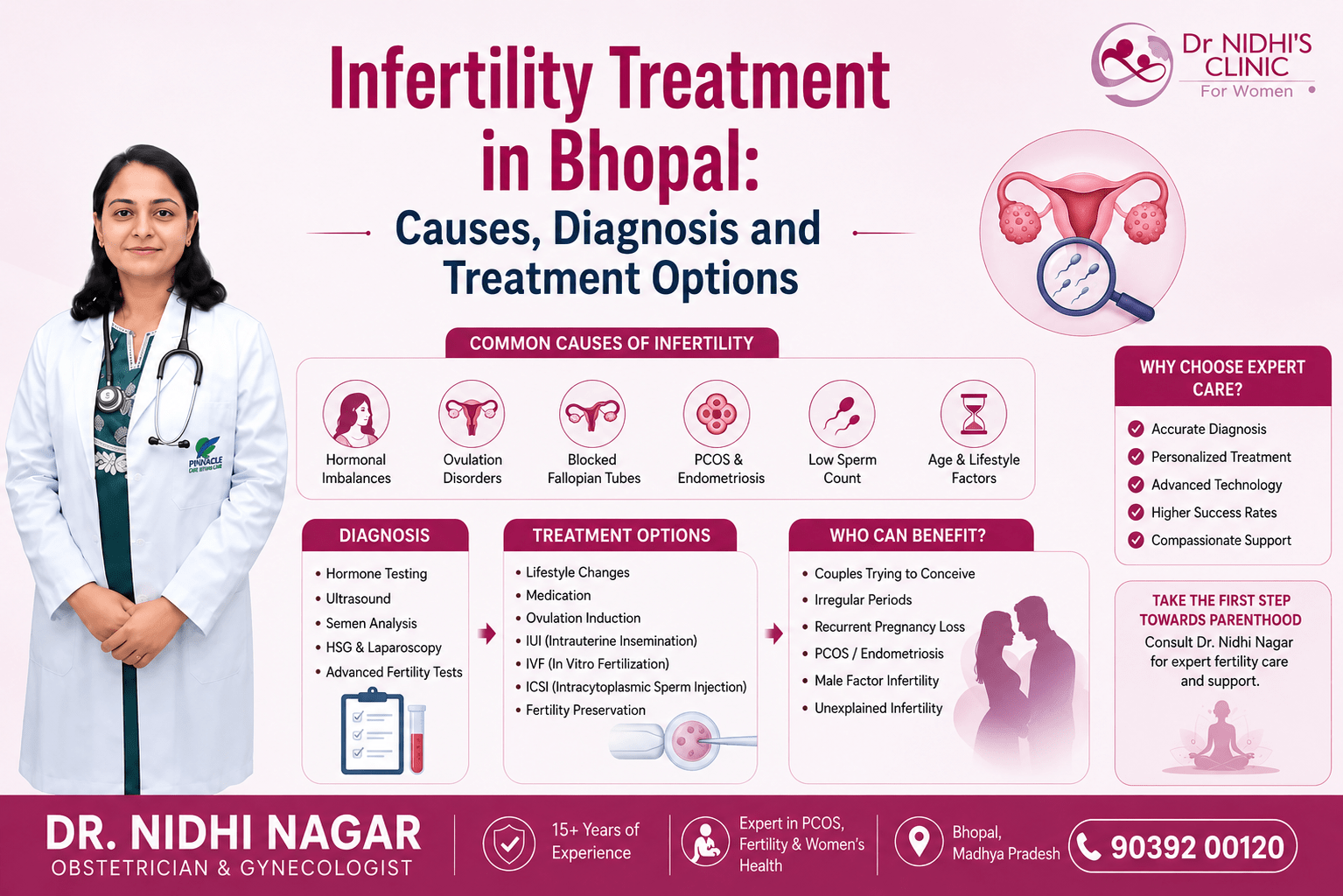
Infertility Treatment in Bhopal is an important consideration for couples who have been trying to conceive without success. Infertility can affect both women and men and may result from hormonal problems, ovulation disorders, blocked fallopian tubes, sperm-related issues, age-related factors, endometriosis, fibroids, or unexplained causes.
However, difficulty conceiving does not always mean that advanced fertility treatment is immediately required. Instead, identifying the underlying cause is usually the first important step.
One of the most common concerns couples have is:
“Why am I not getting pregnant?”
“Do I need fertility treatment?”
“What tests are required?”
“Can infertility be treated without IVF?”
“Which treatment option is suitable for me?”
Fortunately, advances in reproductive medicine have made it possible to identify many causes of infertility and provide personalized treatment. Depending on the underlying problem, treatment may include lifestyle changes, medicines, ovulation induction, treatment of gynecological conditions, intrauterine insemination, or assisted reproductive techniques such as IVF.
At Dr Nidhi Nagar – Best Gynecologist and associated with Bansal Hospital Bhopal, Dr. Nidhi Nagar provides comprehensive evaluation and individualized treatment planning for women experiencing fertility-related concerns.
Infertility Treatment in Bhopal – Understanding Infertility
What Is Infertility?
Infertility generally refers to difficulty achieving pregnancy despite regular unprotected intercourse over a period of time.
Importantly, infertility may affect women, men, both partners, or couples with no immediately identifiable cause.
Therefore, it is important to understand that infertility is not always caused by a problem in the woman. Male factors contribute to a significant proportion of infertility cases, which is why evaluation of both partners is often important.
In some cases, couples may become pregnant naturally after identifying and addressing a specific cause. On the other hand, some couples may require fertility treatment.
Causes of Infertility in Women – What Can Affect Fertility?
Female infertility can have several possible causes. For example, problems involving ovulation, fallopian tubes, the uterus, ovaries, hormones, or age may affect the ability to conceive.
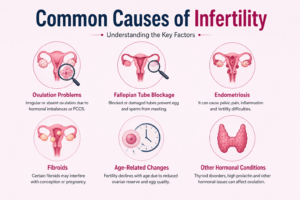
Ovulation Problems
Irregular or absent ovulation can make conception difficult. For instance, hormonal imbalances and polycystic ovary syndrome may affect regular ovulation.
Fallopian Tube Blockage
Blocked or damaged fallopian tubes can prevent the egg and sperm from meeting. As a result, natural conception may become difficult.
Previous pelvic infections, abdominal surgery, or certain gynecological conditions may affect the fallopian tubes.
Endometriosis
Endometriosis can affect the reproductive organs and may contribute to pelvic pain, inflammation, adhesions, and fertility difficulties. Therefore, women with symptoms suggestive of endometriosis may benefit from appropriate evaluation.
Fibroids
Certain uterine fibroids, particularly those that affect the uterine cavity, may interfere with conception or pregnancy. However, not every fibroid affects fertility.
Age-Related Fertility Changes
Female fertility naturally changes with age, particularly because ovarian reserve and egg quality decline over time. Therefore, age can be an important consideration when planning fertility evaluation and treatment.
Other Hormonal Conditions
Thyroid disorders, elevated prolactin levels, and other endocrine problems may affect ovulation. Consequently, identifying and treating these conditions may be an important part of fertility care.
Causes of Infertility in Men – Why Male Evaluation Matters
Male infertility may be associated with:
• Low sperm count
• Poor sperm movement
• Abnormal sperm shape
• Hormonal problems
• Varicocele
• Certain infections
• Previous surgeries
• Lifestyle factors
• Genetic conditions
In addition, a semen analysis is commonly used as an initial investigation when evaluating male fertility.
Therefore, evaluating both partners can help provide a more complete understanding of the possible causes of delayed conception.
Infertility Treatment in Bhopal – When Should a Couple Seek Evaluation?
Couples should consider fertility evaluation when pregnancy does not occur despite regular unprotected intercourse.
However, earlier assessment may be particularly important when a woman has:
• Irregular or absent periods
• Severe pelvic pain
• Previous pelvic surgery
• Endometriosis
• Known fibroids
• Previous ovarian surgery
• History of pelvic infection
• Concerns regarding ovarian reserve
Similarly, men with previous testicular problems, surgery, trauma, or known sperm-related concerns may also benefit from earlier evaluation.
Best Gynecologist in Bhopal – How Is Infertility Diagnosed?
Infertility diagnosis begins with a detailed medical and reproductive history. First, the doctor may review the menstrual cycle and reproductive history. Then, appropriate investigations can be recommended according to the individual situation.
The doctor may evaluate:
• Menstrual cycle pattern
• Ovulation history
• Previous pregnancies
• Previous surgeries
• Medical conditions
• Medication history
• Sexual and reproductive history
• Duration of infertility
Importantly, infertility evaluation is usually individualized rather than based on a single test.
Infertility Diagnosis in Bhopal – Common Tests for Women
Depending on the patient’s symptoms and history, investigations may include several types of assessments.
Hormonal Testing
Blood tests may be recommended to assess reproductive hormones, thyroid function, prolactin, and other relevant parameters. As a result, these tests may help identify hormonal factors affecting fertility.
Ultrasound
Pelvic ultrasound can help evaluate the uterus and ovaries and identify conditions such as ovarian cysts, fibroids, or other structural abnormalities.
Ovarian Reserve Assessment
Certain blood tests and ultrasound findings can provide information about ovarian reserve. However, ovarian reserve testing should be interpreted alongside age, medical history, and other fertility factors.
Ovulation Assessment
The doctor may evaluate whether regular ovulation is occurring. If ovulation is irregular, appropriate treatment may be considered.
Fallopian Tube Evaluation
Tests may be recommended to determine whether the fallopian tubes are open. Therefore, this evaluation can be useful when tubal blockage is suspected.
Uterine Evaluation
When required, additional investigations may be performed to examine the uterine cavity and identify abnormalities that could affect fertility.
Infertility Treatment in Bhopal – Treatment Options
Infertility treatment depends on the cause, age, duration of infertility, ovarian reserve, sperm parameters, previous treatments, and reproductive goals.
Therefore, treatment should be selected according to the individual diagnosis rather than using the same approach for every couple.
Lifestyle and Medical Management
Some couples may benefit from improving lifestyle factors and treating underlying medical or hormonal conditions.
This may include:
• Maintaining a healthy body weight
• Regular physical activity
• Balanced nutrition
• Avoiding tobacco exposure
• Managing chronic medical conditions
• Correcting specific hormonal abnormalities
In addition, addressing relevant lifestyle and medical factors may support overall reproductive health.
Ovulation Induction
For women who do not ovulate regularly, medicines may be prescribed to stimulate ovulation.
During treatment, ovulation monitoring may be performed to determine the response and timing.
Treatment of Underlying Gynecological Conditions
Conditions such as certain fibroids, endometriosis, ovarian cysts, or uterine abnormalities may require treatment when they are affecting fertility.
However, not every gynecological condition requires surgery. Instead, the treatment approach depends on the location, severity, symptoms, and fertility goals.
Intrauterine Insemination
Intrauterine insemination, or IUI, involves placing prepared sperm directly into the uterus around the time of ovulation.
In selected cases, IUI may be considered depending on the cause of infertility and other fertility factors.
IVF Treatment
In vitro fertilization, commonly known as IVF, involves retrieving eggs, fertilizing them with sperm in a laboratory, and transferring an embryo into the uterus.
Generally, IVF may be recommended in situations such as certain tubal problems, severe male-factor infertility, reduced ovarian reserve, or when other treatments have not been successful.
Best Gynecologist in Bhopal – Does Every Couple Need IVF?
No. Importantly, IVF is not automatically required for every couple experiencing infertility.
Depending on the cause, some couples may achieve pregnancy through:
• Lifestyle modification
• Treatment of hormonal problems
• Ovulation induction
• Treatment of underlying gynecological conditions
• IUI
• Other fertility-focused approaches
Therefore, the appropriate treatment depends on the individual diagnosis.
A fertility specialist can help determine whether simple treatment, advanced fertility treatment, or assisted reproductive technology is appropriate.
Infertility Treatment in Bhopal – A Personalized Treatment Approach
There is no single infertility treatment that works for every couple.
For this reason, treatment planning may consider:
• Woman’s age
• Duration of infertility
• Menstrual cycle pattern
• Ovarian reserve
• Fallopian tube status
• Uterine health
• Sperm quality
• Previous fertility treatments
• Medical history
• Future pregnancy goals
As a result, this individualized approach can help couples understand their available options and avoid unnecessary treatment.
Infertility Treatment in Bhopal – A Real Patient Scenario
A 32-year-old woman from Kolar Road had been trying to conceive for more than a year.
She experienced irregular menstrual cycles and was concerned about whether she would require IVF.
After consultation, her menstrual history, ultrasound findings, and relevant hormonal parameters were evaluated. In addition, her partner’s fertility evaluation was considered.
The assessment suggested an ovulation-related fertility problem. Based on these findings, an individualized treatment plan was discussed rather than immediately proceeding to advanced assisted reproductive treatment.
Therefore, cases like this demonstrate why identifying the underlying cause is an important first step in infertility management.
Dr. Nidhi Nagar – Gynecologist in Bhopal
Women seeking infertility evaluation may consult Dr. Nidhi Nagar for comprehensive gynecological care and fertility-focused treatment planning.
Her areas of gynecological care include:
• Infertility Evaluation
• Ovulation Disorders
• PCOS-Related Fertility Concerns
• Endometriosis
• Fibroids
• Ovarian Cysts
• Advanced Laparoscopic Surgery
• Robotic Gynecological Surgery
• Fertility-Preserving Procedures
• Comprehensive Women’s Healthcare
Furthermore, each patient’s treatment plan is developed according to her medical condition, reproductive goals, and individual fertility needs.
Best Gynecologist in Bhopal – Why Fertility Evaluation Matters
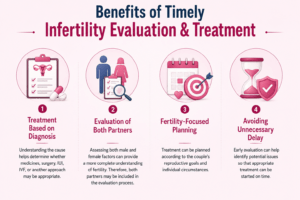
Early Identification of the Cause
Appropriate evaluation can help identify potential factors affecting conception. Consequently, couples can better understand which treatment options may be suitable.
Treatment Based on Diagnosis
Understanding the cause helps determine whether medicines, surgery, IUI, IVF, or another approach may be appropriate.
Evaluation of Both Partners
Assessing both male and female factors can provide a more complete understanding of fertility. Therefore, both partners may be included in the evaluation process.
Fertility-Focused Planning
Treatment can be planned according to the couple’s reproductive goals and individual circumstances.
Avoiding Unnecessary Delay
Timely evaluation may help couples understand their options sooner, particularly when age or known fertility concerns are involved.
Infertility Treatment in Bhopal – When Surgery May Be Considered
Surgery is not required for every infertility case. However, surgical treatment may sometimes be considered for conditions such as:
• Certain fibroids
• Endometriosis
• Endometriotic cysts
• Certain ovarian cysts
• Uterine abnormalities
• Tubal conditions
When surgery is indicated, minimally invasive techniques such as laparoscopy or robotic surgery may be considered in selected patients.
Ultimately, the decision depends on the condition, surgical findings, fertility goals, and overall health.
Infertility Treatment in Bhopal – Areas From Where Patients Seek Consultation
Women and couples may seek fertility evaluation from different parts of Bhopal, including:
• Shahpura
• Arera Colony
• Kolar Road
• Gulmohar
• Bawadiya Kalan
• Danish Nagar
• MP Nagar
• Hoshangabad Road
As a result, patients can seek specialist evaluation when they want to understand why conception has been delayed and what treatment options may be suitable for their situation.
Infertility Treatment in Bhopal – Frequently Asked Questions
What is the most common cause of infertility?
There is no single cause. Instead, infertility can result from ovulation problems, tubal blockage, endometriosis, uterine conditions, age-related fertility changes, male-factor infertility, or unexplained factors.
Can infertility be treated without IVF?
Yes. Depending on the cause, some couples may conceive with lifestyle changes, medicines, ovulation induction, treatment of an underlying condition, or IUI.
Does infertility always mean that something is seriously wrong?
No. In many cases, fertility problems may be temporary or treatable. Furthermore, some couples have unexplained infertility despite normal initial investigations.
Can PCOS cause infertility?
PCOS can affect ovulation and may make conception more difficult in some women. However, appropriate treatment can help improve the chances of pregnancy in suitable cases.
Can fibroids affect fertility?
Certain fibroids, particularly those that distort the uterine cavity, may affect fertility. However, their impact depends on size, number, and location.
Can endometriosis cause infertility?
Endometriosis can affect fertility in some women through inflammation, adhesions, ovarian involvement, or other reproductive effects. Therefore, appropriate evaluation may be important when symptoms are present.
Is infertility treatment different for every woman?
Yes. For example, treatment is based on factors such as age, ovarian reserve, ovulation, tubal health, uterine condition, sperm parameters, and previous treatment history.
When should I consult a gynecologist for infertility?
If pregnancy has not occurred despite regular unprotected intercourse, a fertility evaluation may be appropriate. Additionally, earlier consultation may be advisable when there are known reproductive or gynecological concerns.
Does the husband also need fertility testing?
In many cases, yes. Since male factors can contribute to infertility, evaluation of both partners can provide a more complete assessment.
Can infertility treatment improve the chances of natural pregnancy?
In selected cases, treating the underlying cause can improve the possibility of natural conception. Nevertheless, the expected outcome depends on the individual diagnosis.
Where can I consult Dr. Nidhi Nagar?
Consultation is available through Dr. Nidhi Nagar – Best Gynecologist and at Bansal Hospital Bhopal.
Infertility Treatment in Bhopal – Conclusion
Infertility Treatment in Bhopal has become increasingly individualized with advances in reproductive medicine and gynecological care. Importantly, difficulty conceiving does not automatically mean that IVF is necessary.
Instead, the first step is understanding the possible cause through appropriate evaluation of both partners. Depending on the diagnosis, treatment may involve lifestyle modification, medicines, ovulation induction, management of gynecological conditions, IUI, IVF, or selected surgical procedures.
Furthermore, with experience in comprehensive gynecological care, infertility evaluation, minimally invasive surgery, and fertility-focused treatment planning, Dr. Nidhi Nagar helps women understand their condition and explore appropriate treatment options.
Ultimately, early and personalized evaluation can help couples make informed decisions about their reproductive health and understand the treatment pathway that may be appropriate for them.
